Learn about physical foam molding
What is physical foam molding?

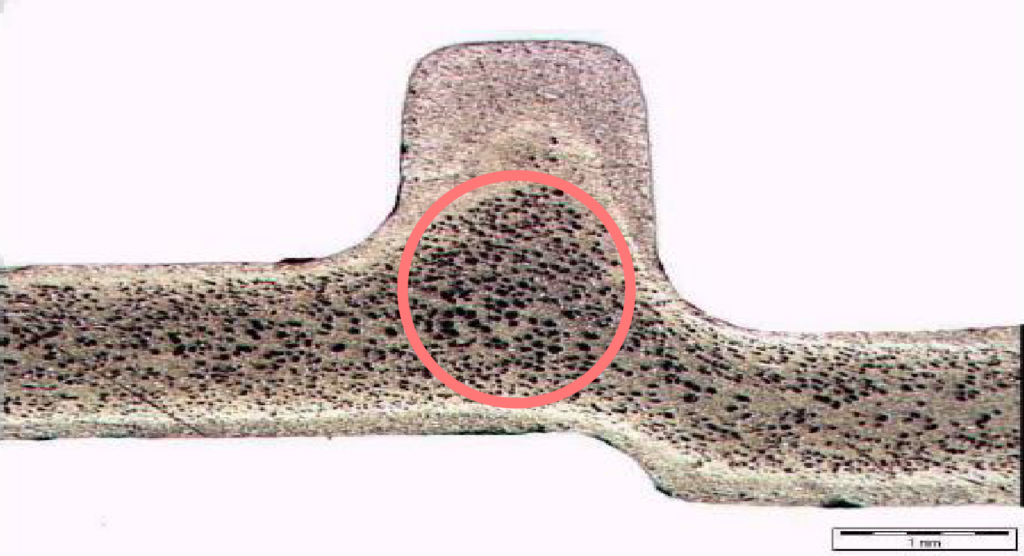
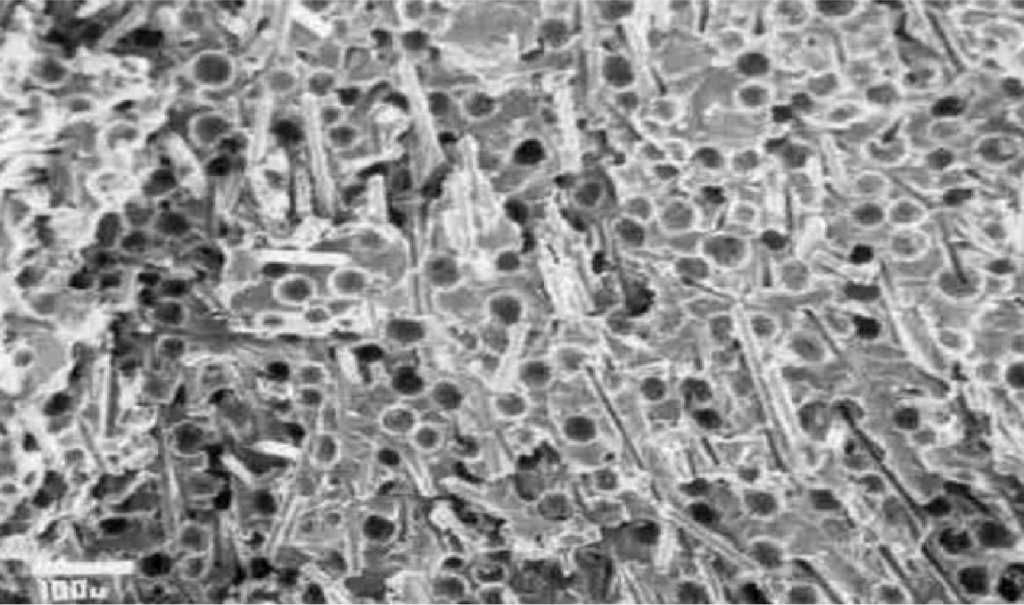
Physical foam molding is a molding technology in which nitrogen or carbon dioxide pressurized to a supercritical state is directly injected and mixed with molten resin in a cylinder, causing foaming as the pressure drops during injection. This creates microscopic bubbles (cell structure) within the resin. Functionality can be optimized without being bound by the constraints of the molding process, and material and weight reductions of 20% or more are possible through low density and flexible design.
Furthermore, unlike chemical foaming agents, there are no processing temperature restrictions and no chemical residues are left in the polymer, so Regrind material retains the same physical properties as virgin material and can be reused. This makes it suitable for the production of consumer products that require recyclability. It is used in a wide range of fields, including automobiles, home appliances, medical devices, packaging materials, and general consumer goods.

The higher the gas pressure used, the more gas dissolves in the resin, allowing for more powerful and uniform foaming.


Supercritical fluid (SCF) is a fluid that combines the properties of both a liquid and a gas when the substance is above its critical temperature and pressure. Supercritical nitrogen and supercritical carbon dioxide are mainly used in resin foam molding. With solubility comparable to that of a liquid and diffusibility comparable to that of a gas, they are easily mixed into container resins, achieving fine foaming.
SCF supply device configuration
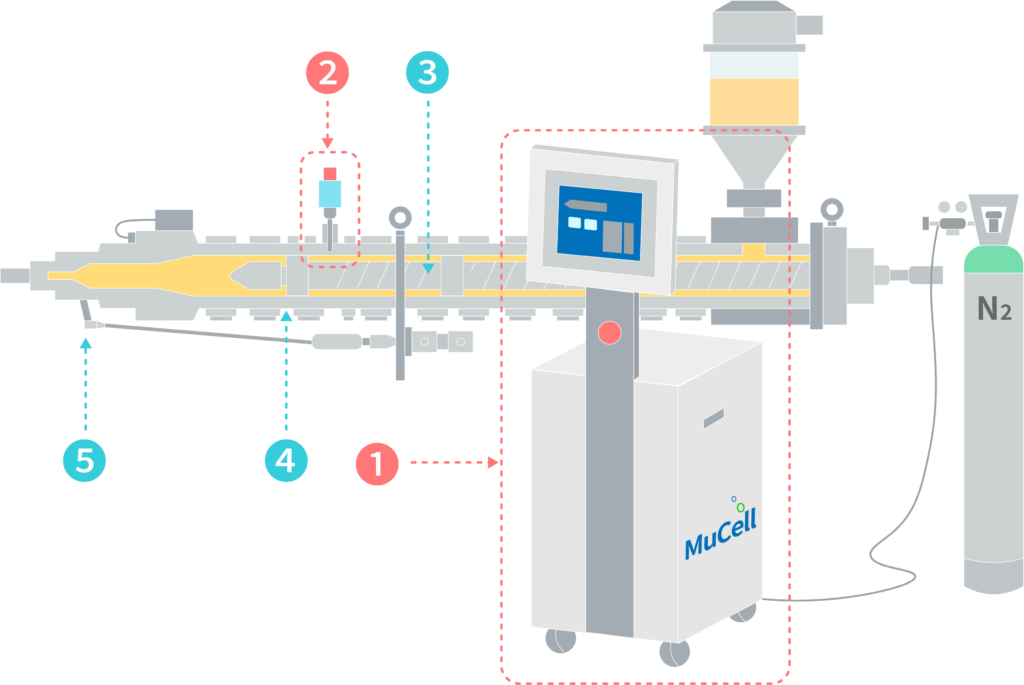
Physical foam molding requires the molding machine's dedicated plasticizing device (optimized screw and cylinder), as well as the MuCell main body, which is a supercritical fluid device, and an injector. Our licensed molding machine manufacturers that support MuCell can also provide quotes for compatible molding machines.
Equipment handled by our company
Please Contact us.
❶ SCF supply device
❷ injector
Please handle this yourself
Please Contact the molding machine manufacturer.
❸ Dedicated screw
❹ Dedicated cylinder
❺ Shut-off nozzle

MuCell lineup
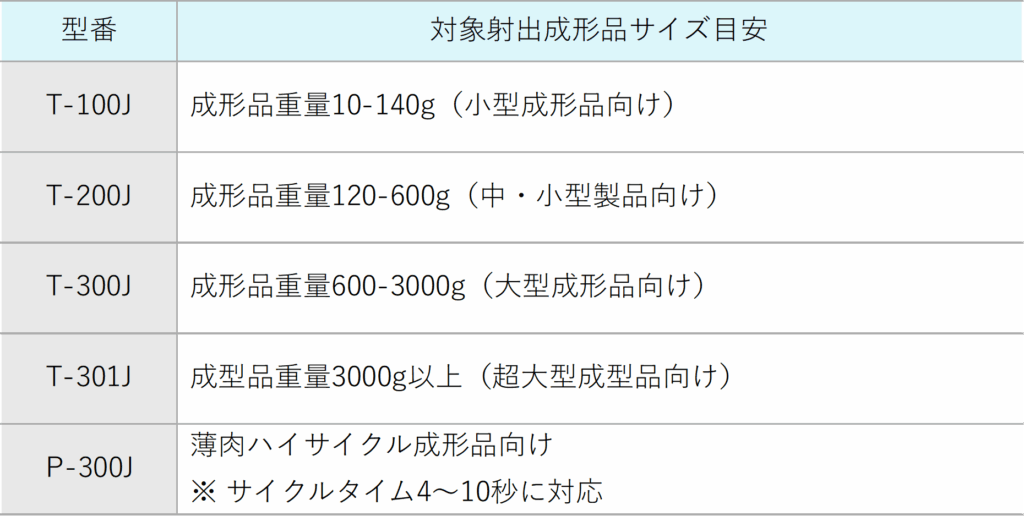
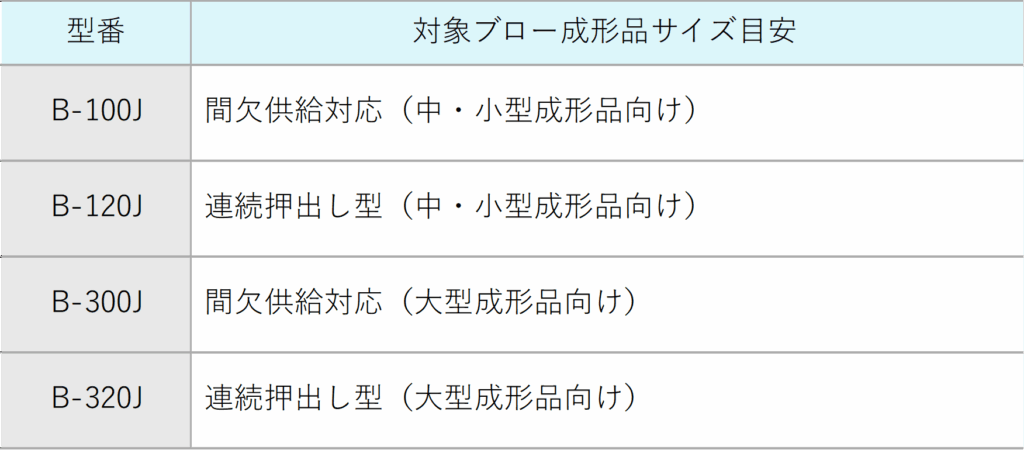
For injection molding machines, we offer a lineup of five types of products according to the size of the molded product and cycle time, and for blow molding, we offer a lineup of four types of products according to the size of the molded product and molding method.


Features
1. Improved ejection performance expands design freedom
By dissolving SCF (supercritical fluid) uniformly in molten polymer, it is possible to lower the viscosity of the resin and reduce the injection pressure. For example, the viscosity of glass fiber reinforced crystalline engineering plastics is reduced by approximately 10 to 15%, and that of amorphous polymers by approximately 15 to 25%.
Lower viscosity makes it possible to keep the injection pressure low even under the same temperature and injection speed conditions. As a result, resin penetrates to every corner, even in thin-walled sections and complex shapes, making it easier to ensure a long flow length. In particular, when carbon dioxide gas is used, the effect of improving fluidity is more pronounced, making it possible to realize design areas that were previously difficult, such as thin walls and complex ribs.

Reducing the injection pressure reduces the load on the mold, which also leads to an extension of the mold's lifespan.
2. Low-pressure molding achieves a beautiful, high-precision finish
In foam molding using SCF (supercritical fluid), the growth of cells (microscopic bubbles) plays a role in filling and holding pressure, so there is no need to apply high injection pressure or long holding pressure as in the past.
As a result, residual stress inside the resin is reduced, and molding defects such as sink marks, warpage, and vacuum voids are significantly reduced, enabling the stable molding of molded products with high dimensional accuracy. In particular, in structures with ribs or thick sections, sink marks can be effectively suppressed due to the effect of cell growth, and appearance quality is not compromised even if the rib thickness is set to the same as the base thickness.
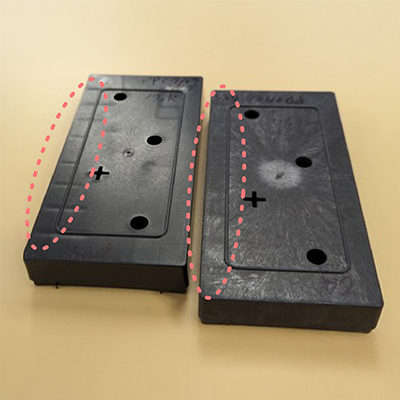
Comparison of sink marks

Solid molded product (left) Weight: 36g
MuCell molded product (right) Weight: 29g
Achieved a 20% weight reduction
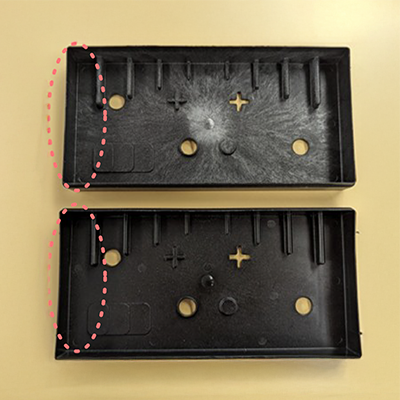
Comparison of short side warpage

Solid molded product (bottom) Warp: 1mm
MuCell molded product (top) Warpage: 0.2 mm
Achieved a reduction in warpage of 0.8 mm
3. Foaming and design optimization reduce weight and material usage
By forming tiny air bubbles (cells) inside the resin, the density of the product is reduced, generally resulting in a weight reduction of around 10%.
Furthermore, because foaming reduces sink marks, it is possible to ensure thickness only in areas where it is structurally necessary and to thin out unnecessary areas, resulting in a reduction of approximately 20% in material. By combining these two, weight reductions and material cost reductions of up to approximately 30% can be achieved.
For example, in the decorative panels of automobile interior doors, foam molding using MuCell and optimizing the design can significantly reduce the amount of resin used.
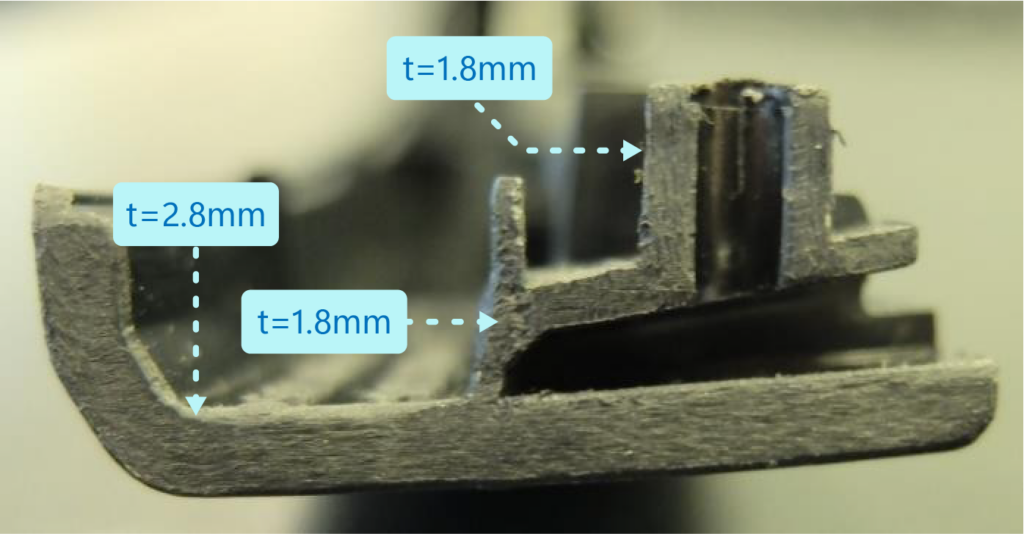
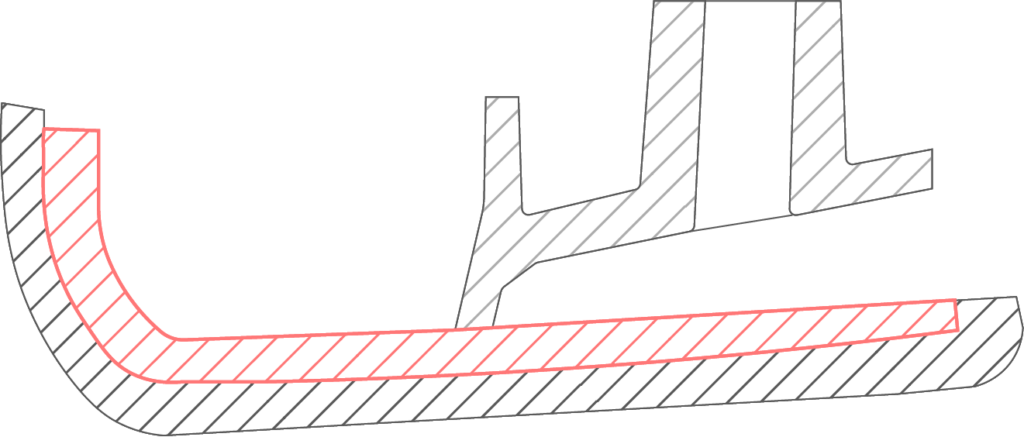
Solid Design


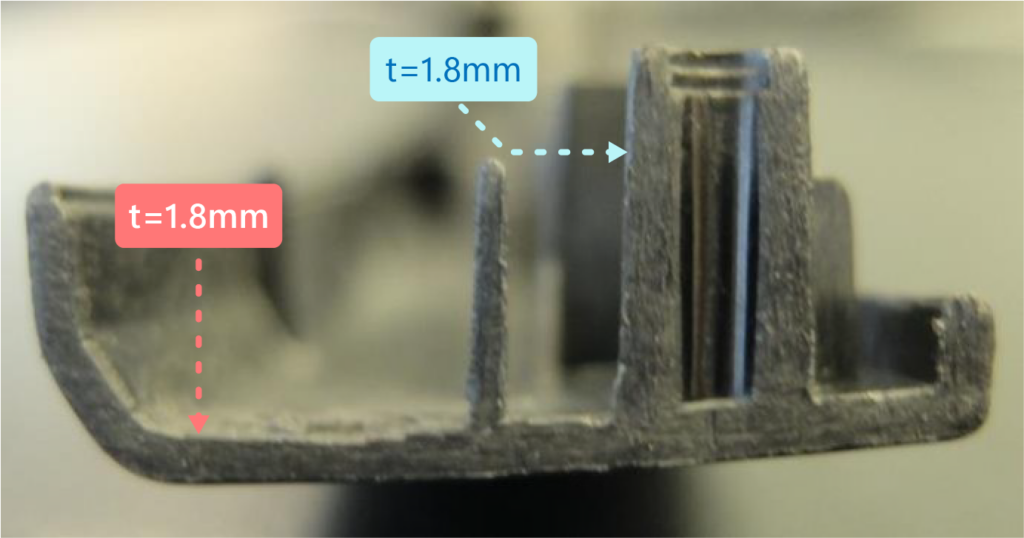
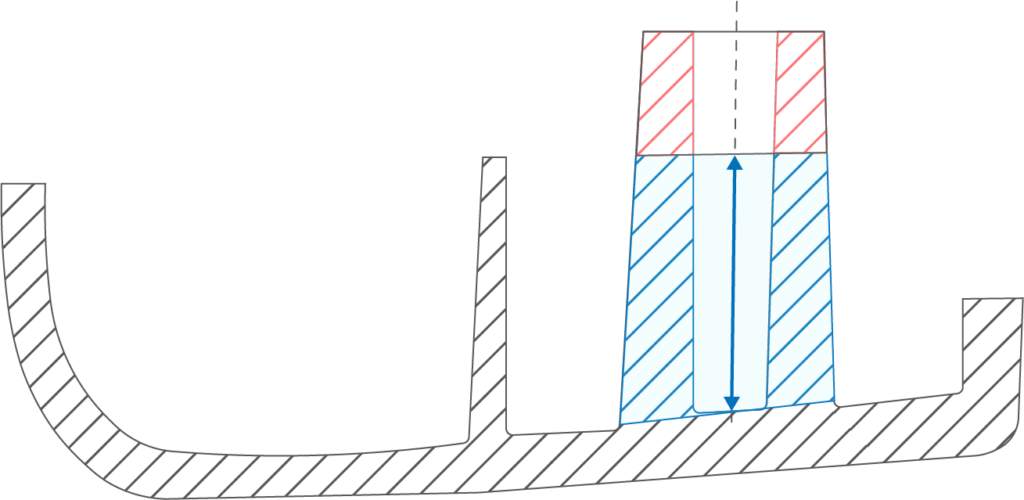
MuCell design (wall thickness ratio 1:1)


By changing the design, we were able to reduce the thickness from 2.8mm to 1.8mm, successfully reducing the amount of resin used by a total of 40%.
4. Reduced pressure holding time contributes to maximizing productivity
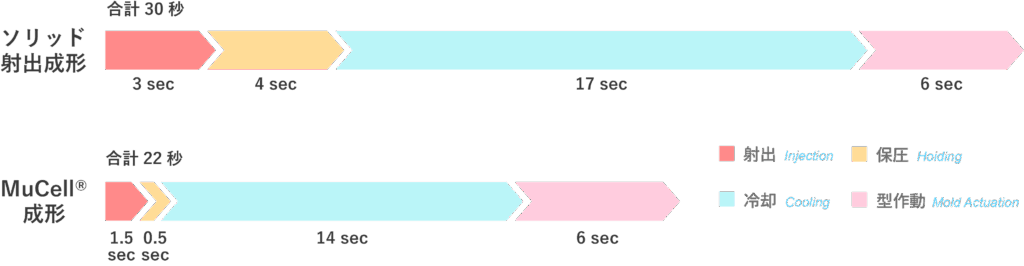
Because cell growth compensates for the packing process, the packing time can be significantly reduced. This reduces the overall cycle time and improves production efficiency. On mass production lines, this directly translates into an increase in annual production volume.
Furthermore, reducing the holding time also contributes to reducing residual stress, leading to more consistent dimensional stability and appearance quality.

5. Compatible with a wide range of resins, ensuring future recycling
SCF foaming is applicable to most thermoplastic polymers and forms a uniform and fine cell structure. Because no chemical foaming agents are used, no chemical residues remain in the polymer, and there is almost no deterioration in physical properties even when recycled. Even when runners or defective products are crushed and reused, quality close to that of virgin material can be maintained.
Furthermore, even with high-heat-resistant, high-cost materials such as PEEK, PEI, and PSU, the weight reduction and cycle shortening effects are significant, achieving both cost reduction and productivity improvement.

It has received high praise in the fields of consumer products and automotive parts, where recyclability and environmental friendliness are important, and contributes to the creation of sustainable manufacturing processes.
Molding process
Introducing the four technical steps


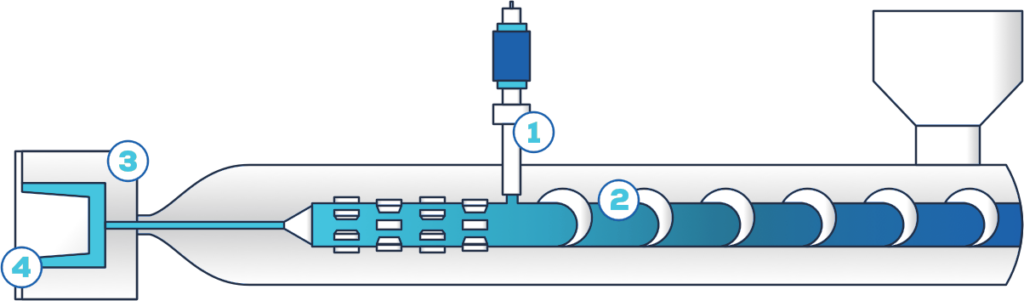
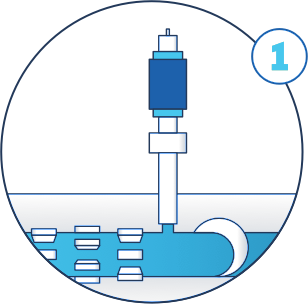
During the plasticization process, a precisely metered amount of supercritical nitrogen or carbon dioxide (SCF) is injected into the molten resin through a dedicated injector attached to the barrel.

The injected SCF is uniformly dispersed and mixed by a specially designed screw with a mixing section inside the plasticizing barrel, which ensures that the SCF is stably dissolved in the molten resin and forms a single-phase homogeneous melt.

Subsequently, when the single-phase melt is injected into the mold cavity, a rapid pressure drop within the cavity nucleates foam cells, and the uniformly dispersed SCFs at the molecular level form a homogeneous, closed-cell foam structure with a solid skin layer.

Controlled cell growth then occurs, eliminating the need for the traditional packing process and applying a uniform, low-pressure filling pressure throughout the mold cavity. Once the cavity is finally filled, cell growth stops, resulting in a stable molded part.
Case studies