Evolving Approaches to Recycling in Plastic Molding Operations
The new normal: Integrating recycling into the plastic industry
In recent years, efforts to recycle plastics have been accelerating worldwide from the perspective of reducing environmental impact and recycling resources. As concerns grow over environmental issues caused by mass production and mass disposal, manufacturers of plastic products are being asked to address the entire lifecycle, from raw material selection to molding and post-use reuse. The shift to a circular economy is being promoted through the promotion of the 3Rs (reduce, reuse, recycle) and the use of recycled materials.
In Japan, the Act on Promotion of Resource Recycling of Plastics (Plastic Resource Recycling Promotion Act) came into effect on April 1, 2022, and resource recycling efforts at each stage, from product design to manufacturing, use, and disposal, have been positioned as important guidelines for manufacturers. As a result, manufacturers of plastic products are being asked to take on-site measures, such as selecting materials with an eye toward recycling and reducing waste plastic emissions during the molding process.
As such, rather than simply reducing waste, how to utilize the plastic generated at molding sites as a resource has become an important theme for plastic product manufacturers.
A new standard for plastic resource circulation starting in the automotive industry
Circular design: Manufacturing for the full vehicle lifecycle under ELV regulations
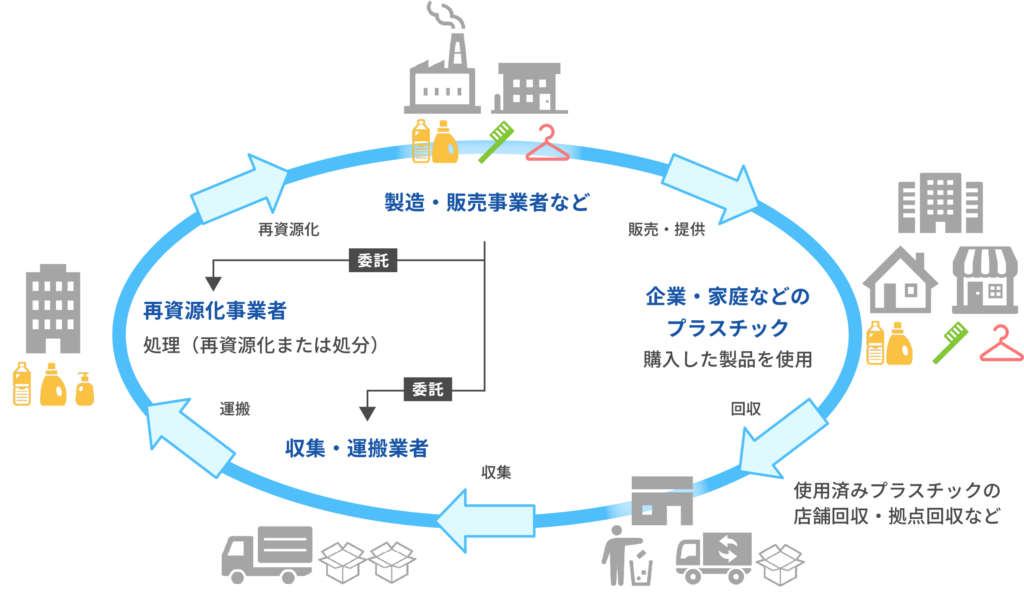
The automotive industry is moving towards treating the entire process from vehicle manufacturing to use and disposal as a single cycle, driven by growing corporate demands for resource recycling and reducing environmental impact.
One notable example of this trend is the End-of-Life Vehicles (ELV) regulations, which are being developed primarily in the EU. The ELV regulations require increased recyclability of scrapped vehicles, starting from the design and material selection stages, and clearly outline the premise of using recycled materials, particularly for plastic materials.
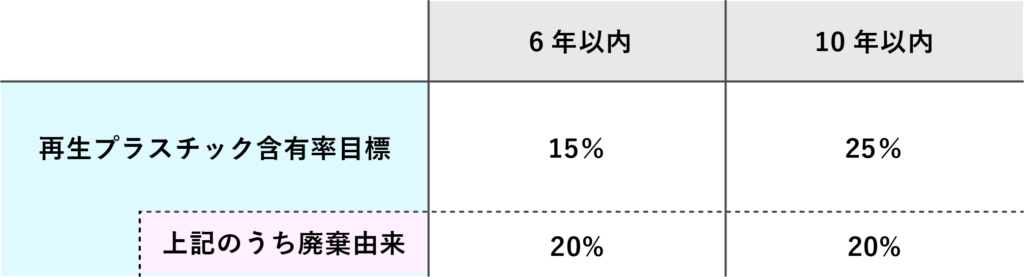
Specifically, the regulations require that at least 15% of the plastics used in automobiles be recycled plastics within six years of their enforcement, and that this be increased to 25% within 10 years. In addition, 20% of the recycled plastics must be recycled materials derived from end-of-life vehicles, such as used automobiles and parts removed during use.
As such, in the automotive industry, material management is becoming increasingly important, not just regarding "which materials to use" but also including "how to recycle them after use." This is not just an issue for automakers, but is also a trend that cannot be ignored when considering future manufacturing for manufacturers that mold and supply plastic products.
It's not just about whether or not something can be molded, but how to manage the plastic generated during the molding process and lead to its reuse. We are entering an era where this very approach will lead to the evaluation of material selection and molding processes.
Recycling begins at the molding site
In response to this trend toward resource recycling, it is becoming increasingly important for manufacturers of plastic products to consider what they can do in-house. However, in most cases, the process of crushing and recycling the molded products themselves is outsourced to specialized companies.

So, we would like to take another look at the sprues and runners that are generated on a daily basis during the molding process. Although these do not become part of the final product, their material is the same as that of the molded product, and by properly crushing and managing them, they can be reused as materials.
While recycling of molded products is outsourced, in-house recycling of sprues and runners can be started without difficulty through the judgment and management of the molding site. Treating sprues and runners as "reusable resources" rather than treating them as "waste" leads to reduced material loss, lower costs, and even a reduced environmental impact.
In this way, focusing on the molding process is an effective way to put resource recycling efforts into practice at the on-site level.
The importance of the crushing process that supports runner recycling
To reuse sprues and runners, it is not enough to simply crush them. Variations in particle size, dust generation, and contamination with foreign matter can lead to reduced molding quality and equipment problems.
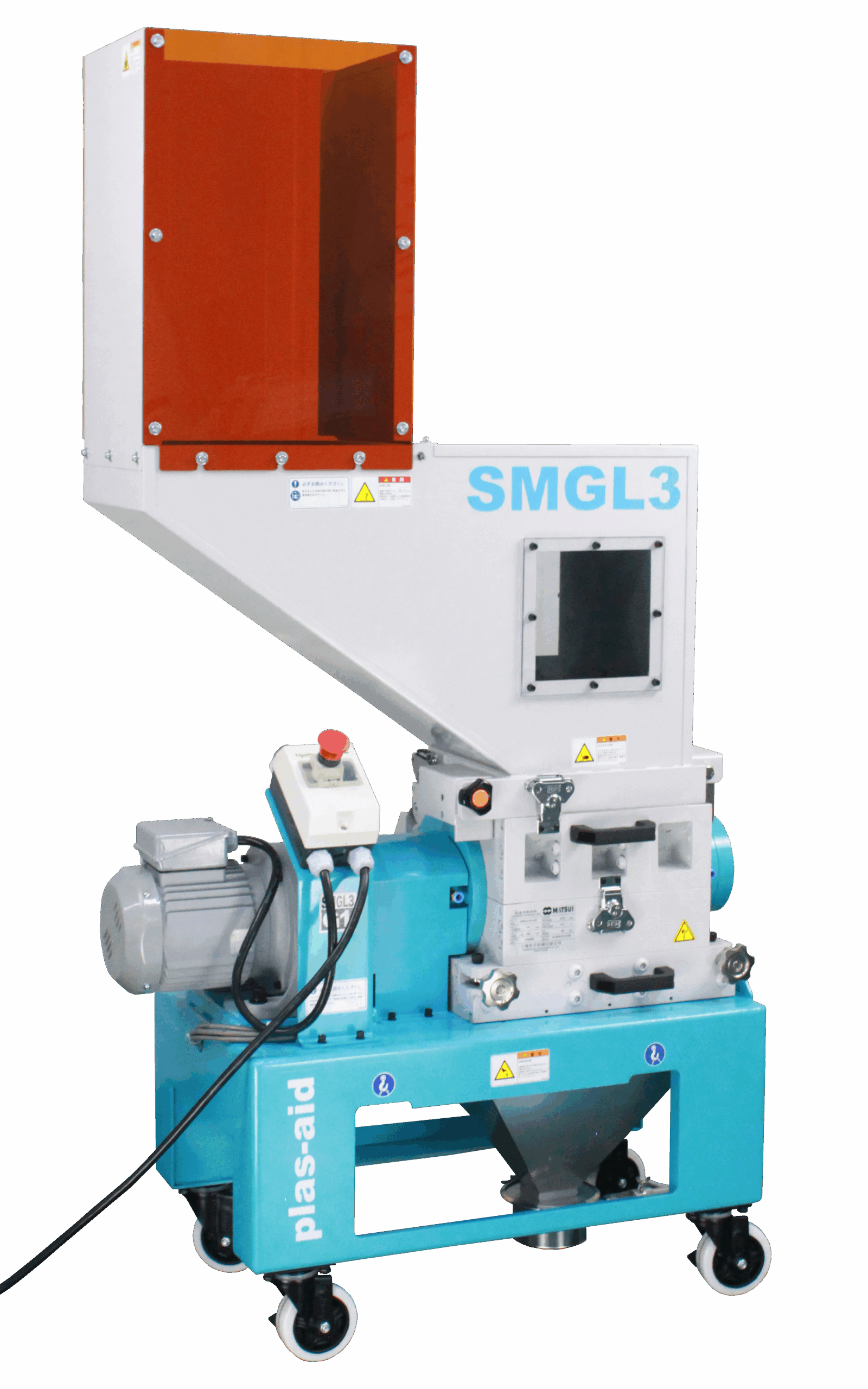
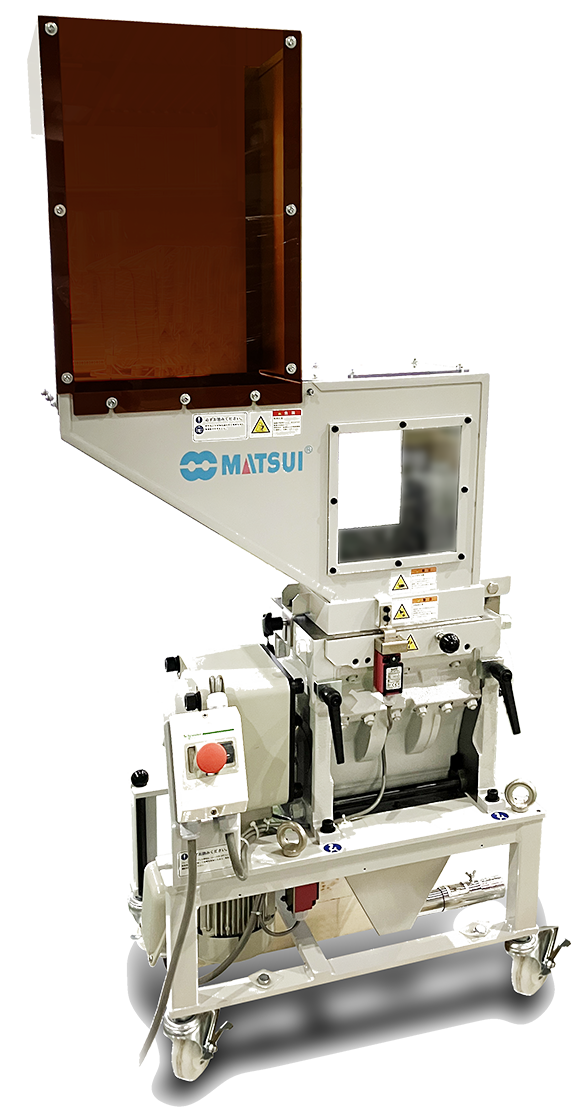
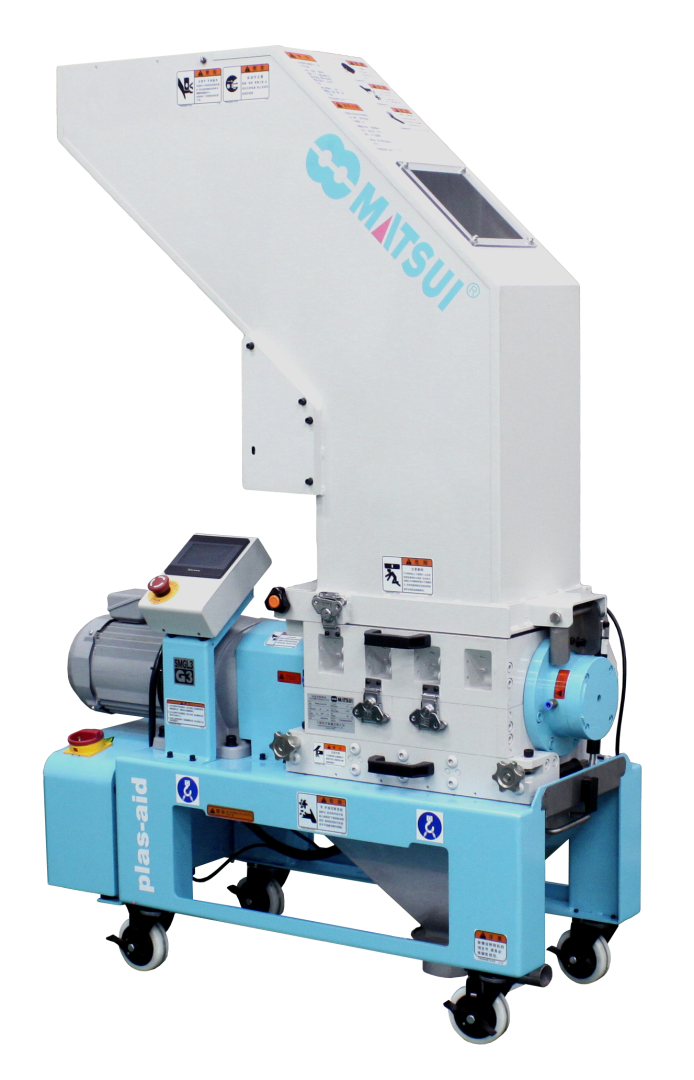
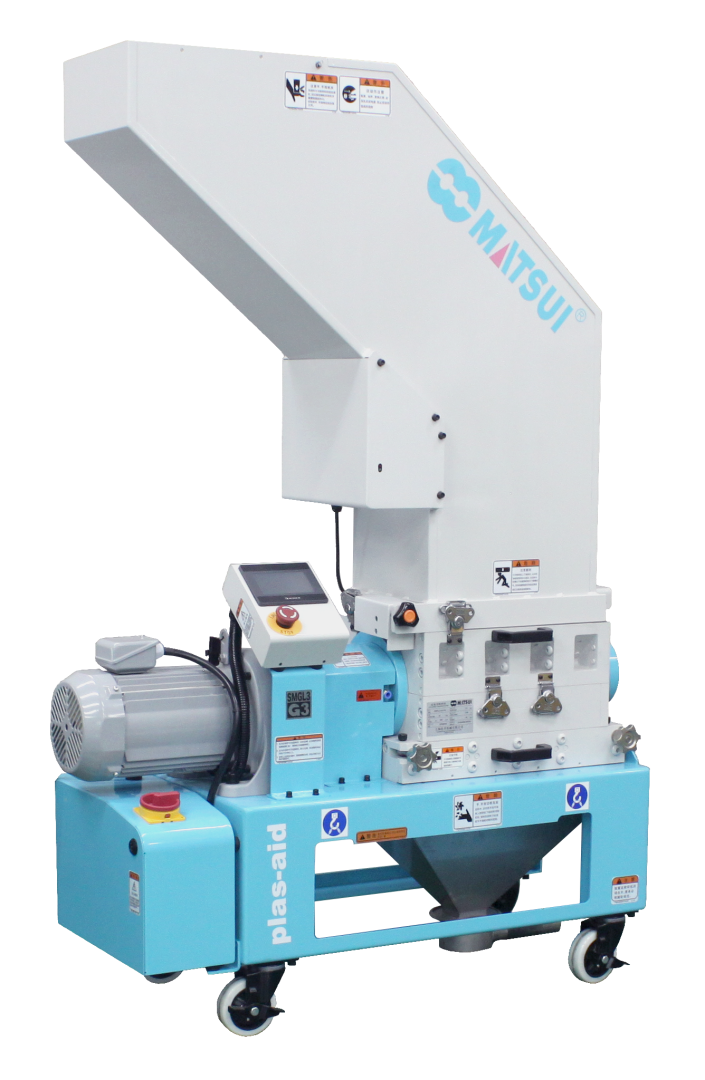
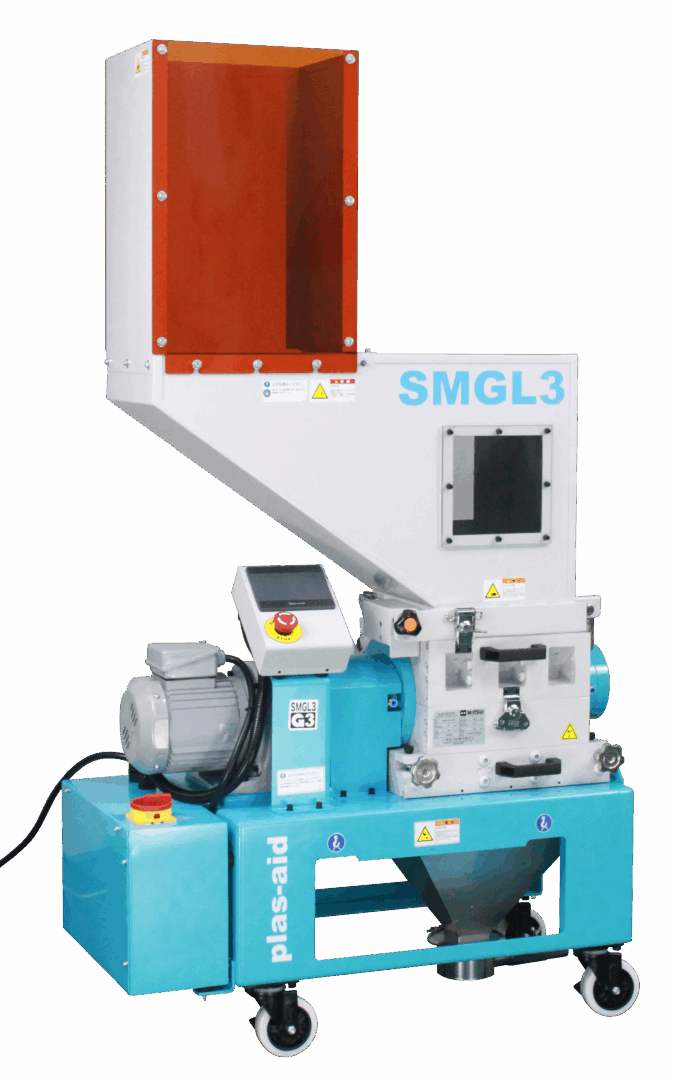
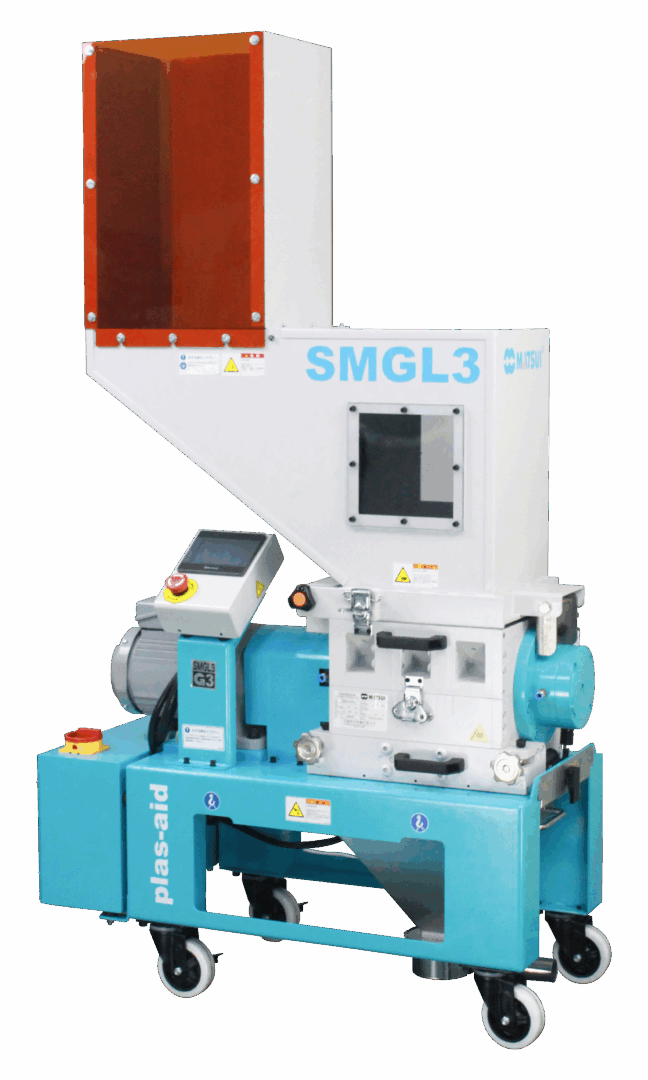
Therefore, in order to utilize the sprues and runners generated during the molding process as stable recycled materials, it is important to process them uniformly under appropriate crushing conditions.Our Low -speed Granulator the SMGL3, was designed to address these challenges.
Features
1. Newly designed cutter with sharp cutting edge for improved grinding accuracy
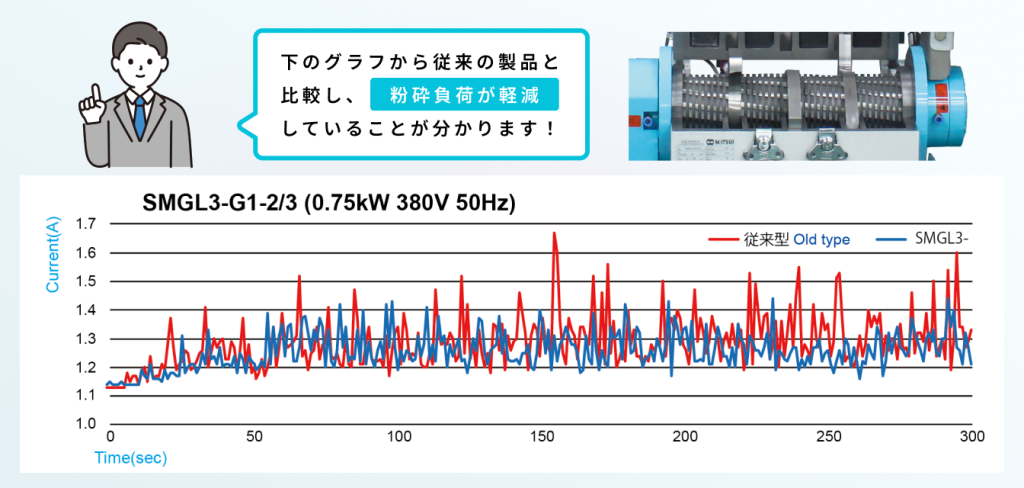
By adopting a newly designed cutter with a revised blade structure, we have achieved stable crushing and reduced crushing load.
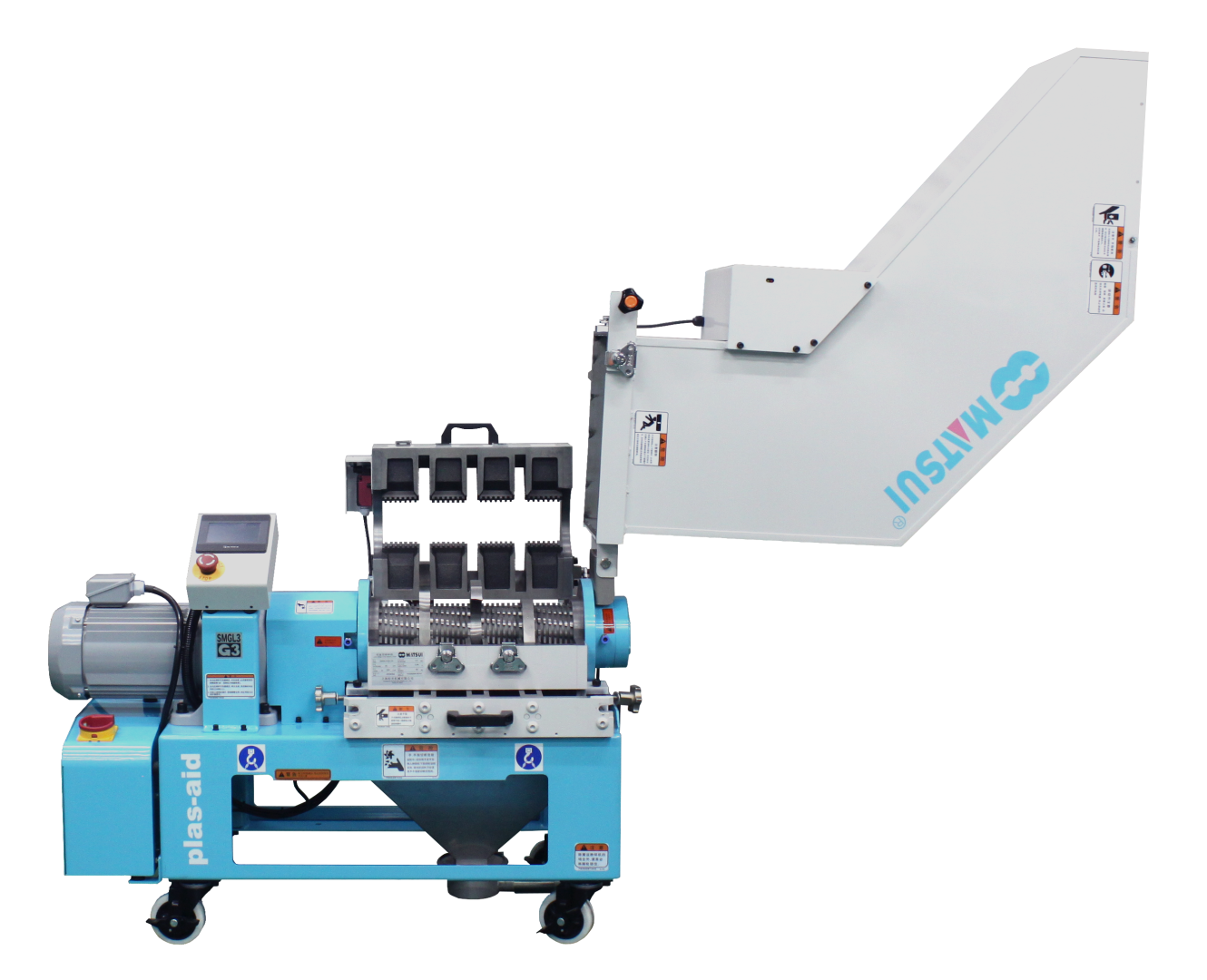
In addition, the blades (fixed blade, fixed crushing blade, guide blade) can be used on both sides.
2. Three points to improve cleaning
💡One-way access structure
Even if Granulators is arranged next to the molding machine, it is possible to clean the entire Granulators. Conventionally, Granulators had to be moved forward in order to be cleaned, but the SMGL3 has a structure where the cleaning section can be opened completely from one side, making daily maintenance easier.

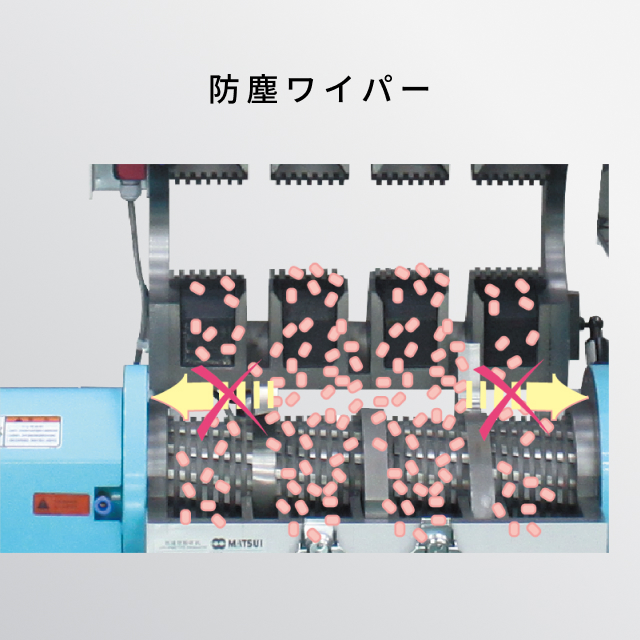
💡Dustproof wiper
Dustproof wipers are installed on the left and right sides of the chamber to prevent dust from entering the chamber. This prevents powder generated by grinding from getting into places where it is difficult to remove.
💡Double-sided cutter
The blade can be used on both sides to maintain sharpness and reduce dust generation.

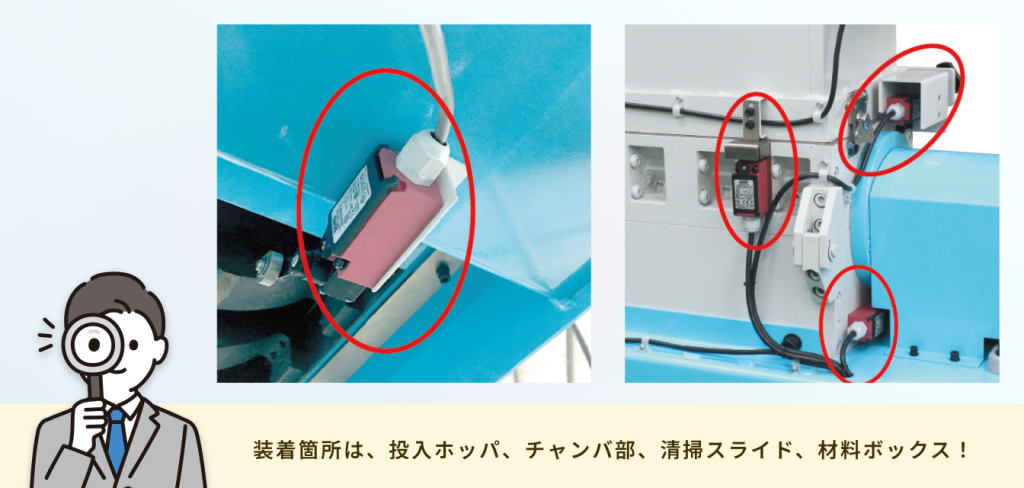
3. Uncompromising Safety: Engineered for Peace of Mind
Equipped with safety limit switches in four locations.
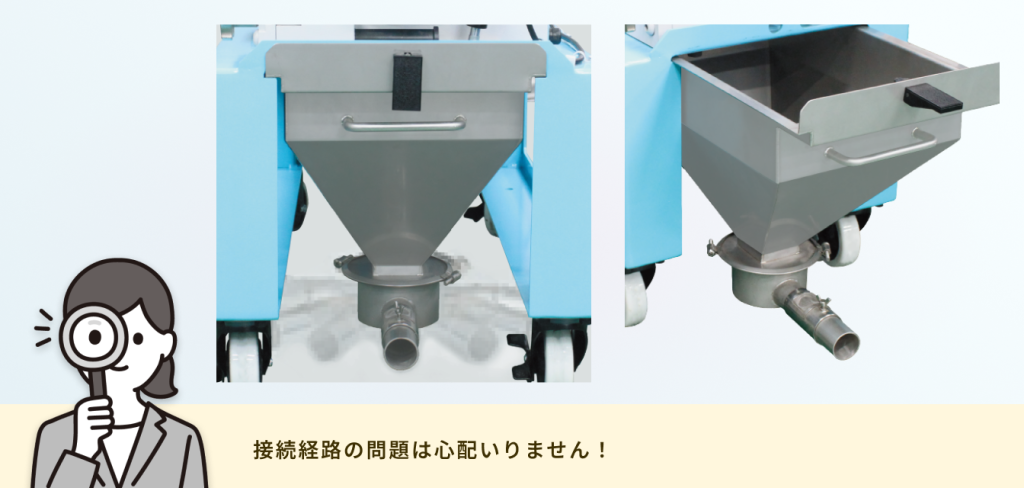
4. More User-Friendly Operation
360-degree connectivity allows for seamless integration into any production layout, even in confined spaces. The suction box at the base features a secure locking mechanism and can be easily detached for quick maintenance.
Here's what's great about High value added model SMGL3-G3!
Do you have any of these problems?
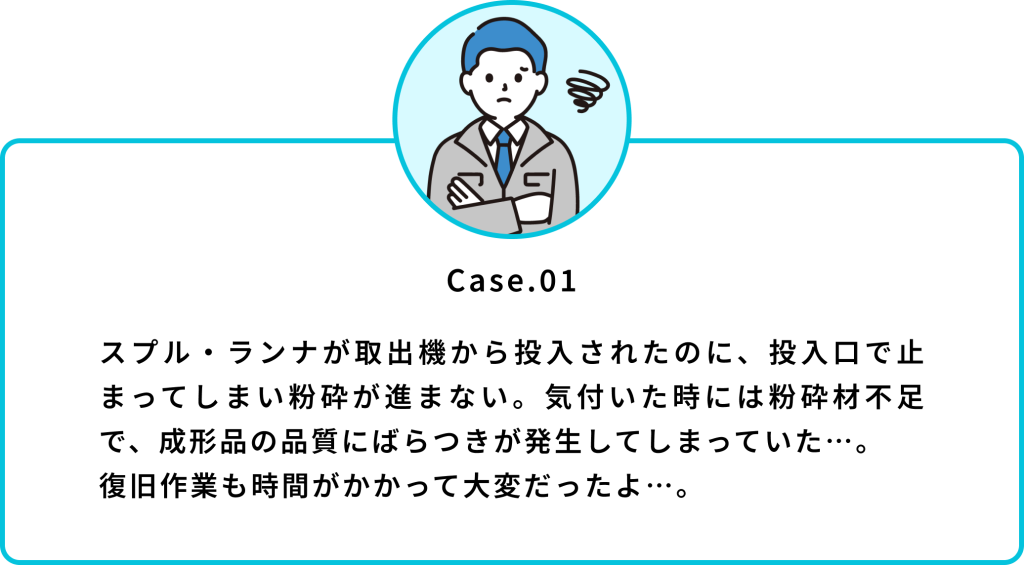

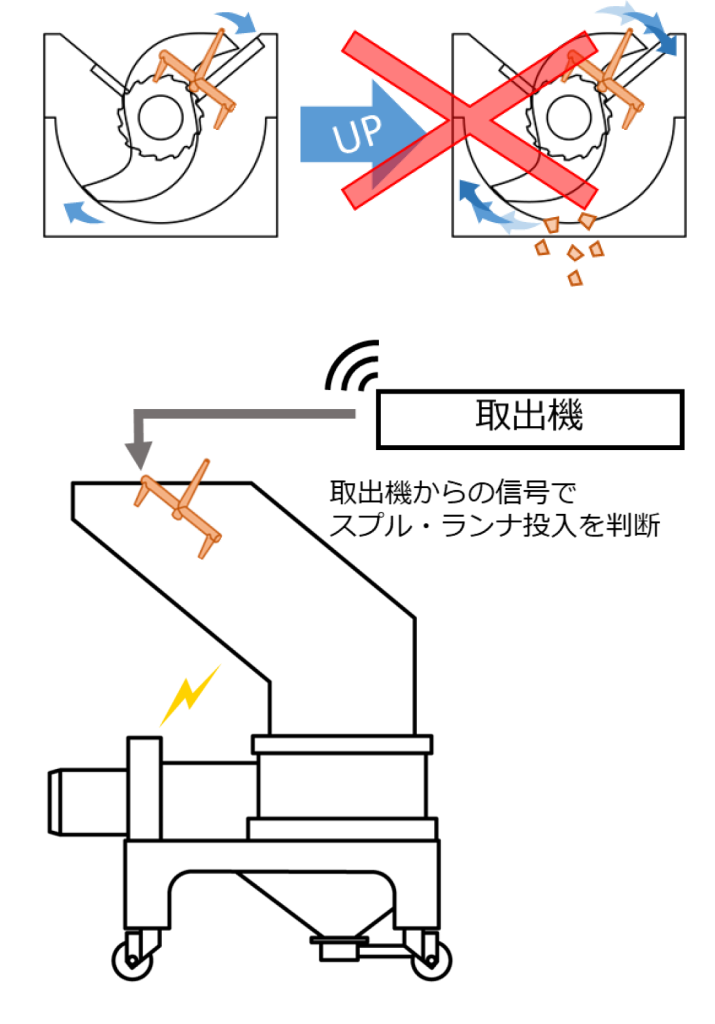
By linking the SMGL3 with the unloading machine, it is possible to detect the material input status.
After the sprue/runner is inserted, if the rotation speed of the crushing blade remains low due to bridges occurring inside the equipment or continued idling, an alarm will News to detect that crushing is not completed.


A capacitance metal detection sensor detects metal foreign objects passing through, stopping the machine and protecting the alarm equipment. Also, there is no need to worry about sprues and runners not entering the detection range as they move inside the feeding hopper, as they will hit the anti-scattering curtain and slide down the feeding hopper, eliminating the problem. Many sprues and runners pass through the detection range and are detected as metal foreign objects. (Custom order available)


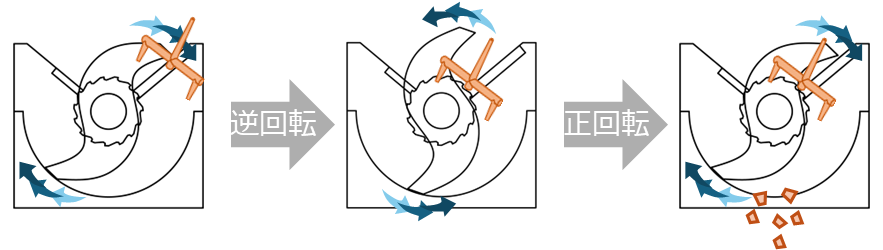
When an overload is detected from power consumption, it is determined that the sprue/runner is jammed, and the crushing blades are Reverse rotation, then rotated forward again to retry crushing. When the jam is resolved, normal crushing continues.

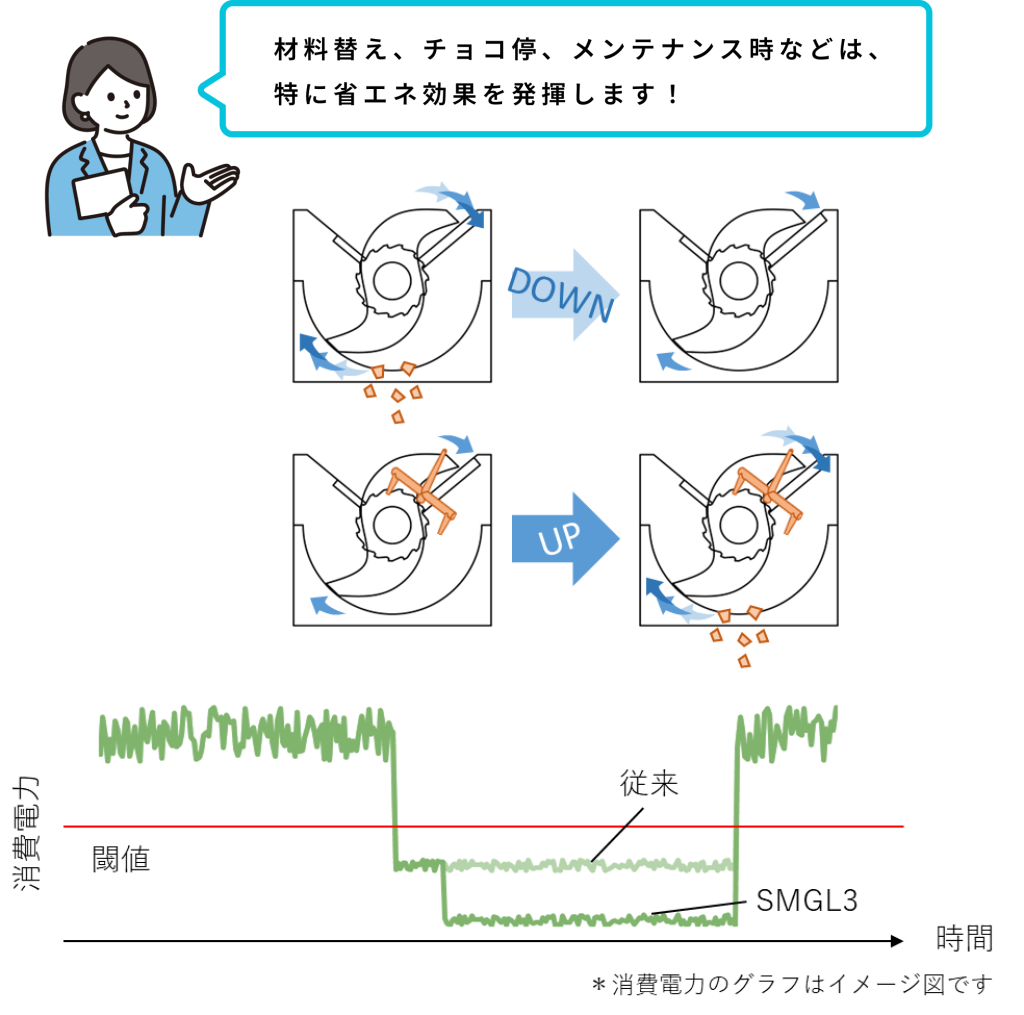
When it detects No-load from the power consumption, it determines that there is no sprue/runner and reduces the rotation speed of the grinding blades.Then, when it detects a load again from the power consumption, it assumes that the sprue/runner is turned on and increases the rotation speed of the grinding blades.