The role of cooling water in protecting quality and productivity
Water quality issues that occur at molding sites and their effects
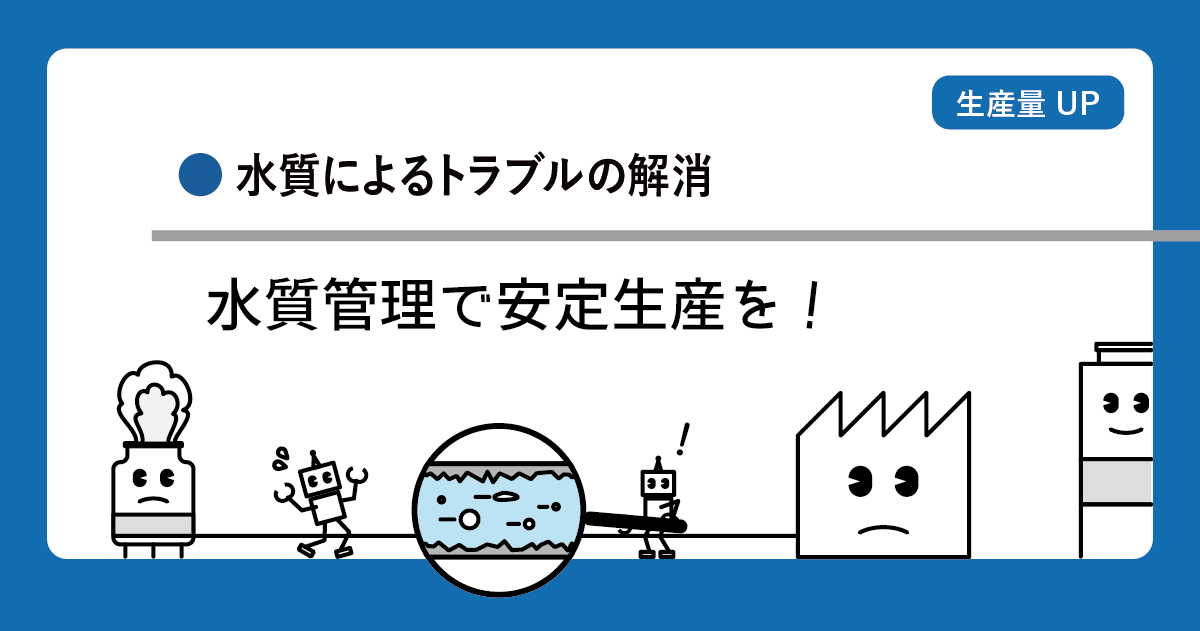
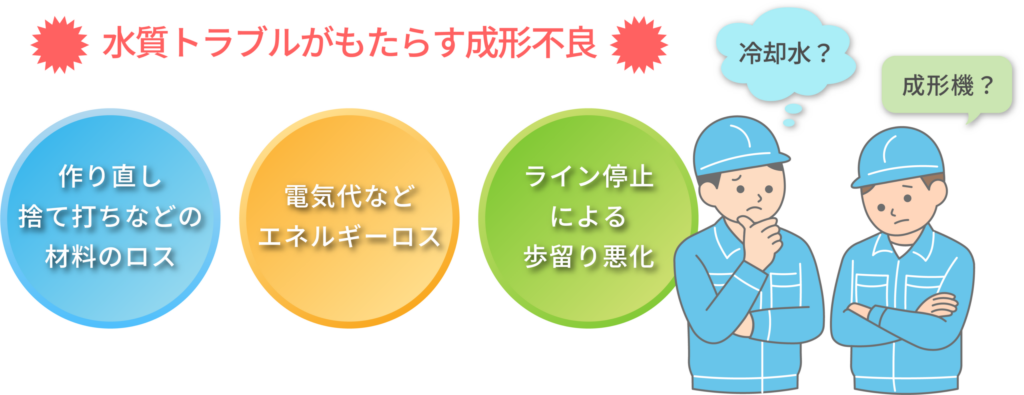
In recent years, molding sites, including precision molding, are required to maximize the performance of increasingly complex molds. To achieve this, stable temperature control using Mold Temperature Controller is essential. However, even if there is no problem with the set temperature, there are cases where the cooling efficiency decreases, extending the cycle time or causing molding defects such as sink marks and warpage. These problems are often caused by factors other than mold temperature control, the most common of which is a deterioration in the quality of the circulating cooling water.
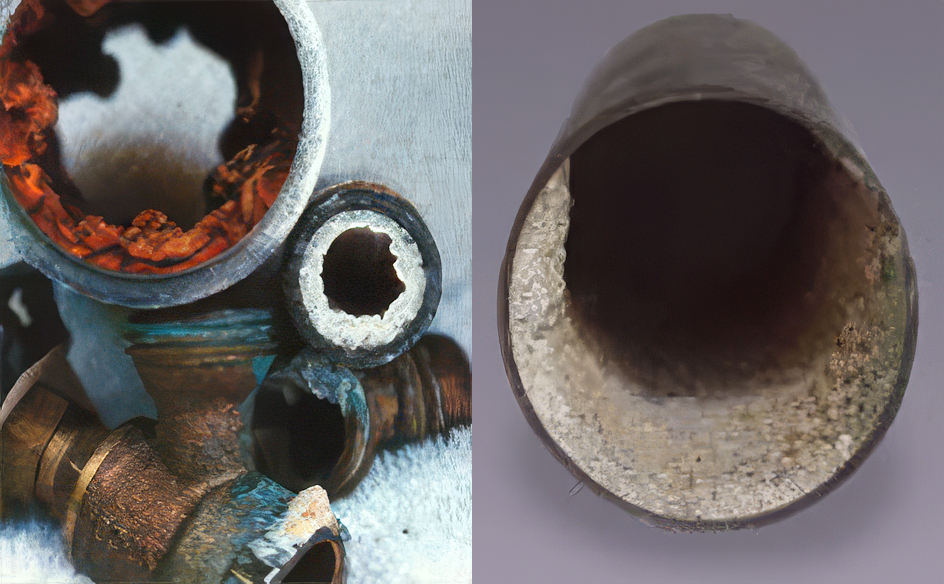
When water quality deteriorates, rust, scale, and sludge build up in the pipes and mold water channels, causing a decrease in flow rate and partial blockages. As a result, cooling efficiency decreases and mold temperatures become uneven, affecting molding cycles and quality. Furthermore, the progression of corrosion can lead to pipe damage and equipment failure.
To prevent these issues, daily management to maintain the quality of cooling water at an appropriate level is essential.
The mechanism behind water quality deterioration that causes molding defects
There are several physical and chemical factors behind the deterioration of the quality of circulating cooling water.
First, red rust (iron oxide) is the most common cause of deterioration. Iron-based components ionize in water, and the dissolved iron reacts with dissolved oxygen to form oxides. Even in a sealed circuit, oxygen is supplied through make-up water and tiny intrusion paths, so it is not possible to completely prevent the formation of red rust.
The resulting red rust and suspended particles are carried by the circulating flow into the water channels of pipes and molds, where the combined effects of particle deposition and corrosion can cause localized damage and "erosion-corrosion." This can narrow the water channels, leading to damage such as blockages and pinholes.
Next, scale (a deposit of mineral components) adheres to heat exchange surfaces and inhibits heat transfer. Furthermore, biofilms (slime) are formed by the film-like adhesion of microorganisms and their metabolites, which can cause blockages in strainers and sprinklers. The buildup of scale and slime can lead to reduced cooling efficiency and uneven temperatures, increasing the risk of molding defects.
These deterioration factors often progress in combination, making it difficult to identify the cause when a problem occurs.
Circulating cooling water determines the quality of molded products
The condition of circulating water is not just a matter of equipment maintenance; it is an important factor that affects the quality of molded products. The adhesion of red rust, scale, biofilm, etc. disrupts temperature control accuracy, reducing productivity and increasing the risk of problems.
For this reason, it is important to routinely monitor water quality indicators such as pH, iron concentration, and flow rate, and to manage the water as needed by chemical treatment, filtering, softening, etc.
Proper water quality management is the basis for maintaining a stable mold temperature and is essential for achieving both quality and productivity.
SAVVYLAINE® prevents iron rust
What is SAVVYLAINE®?
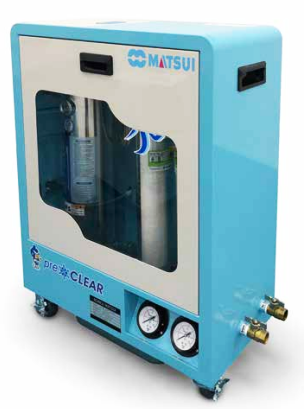
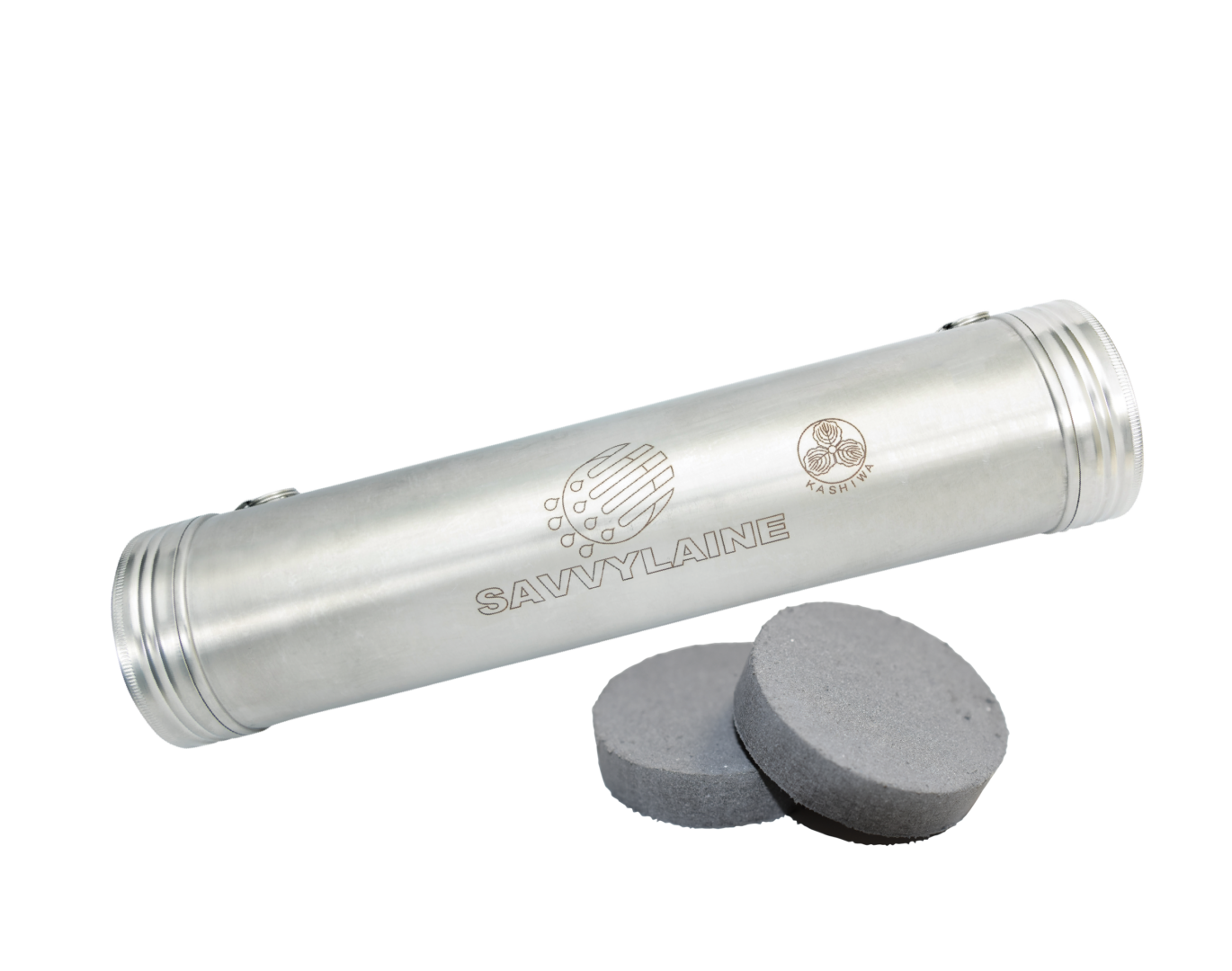
Sabilene is a water quality improvement device that suppresses the occurrence and progression of iron rust (iron oxide) in the circulating cooling water used in Mold Temperature Controller.
By suppressing the generation of iron oxide in the circulating water, it helps protect the mold water holes, maintain cooling efficiency, and prevent molding defects and equipment problems.
Principle of rust prevention using ionization tendency
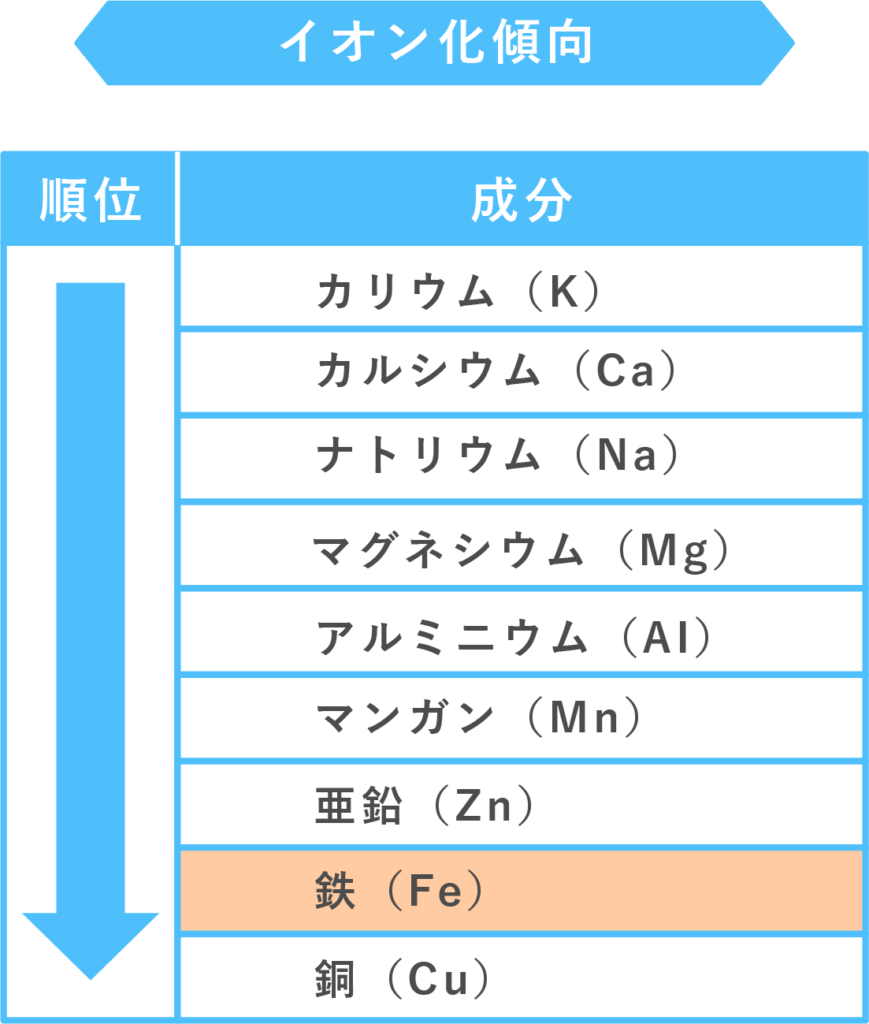
The action of alkali metal and alkaline earth metal ions such as potassium, sodium, calcium, and magnesium dissolved by SAVVYLAINE® suppresses the ionization (oxidation) of iron in the circulating cooling water.
Some metals lose electrons and ionize (oxidize) easily, while others do not; this property is known as ionization tendency. Alkali metals and alkaline earth metals have a higher ionization tendency than iron, and tend to be oxidized first. Therefore, in an environment where these metal ions are present in the circulating cooling water, iron is relatively difficult to ionize, which results in the suppression of the formation of red rust (iron oxide).
SAVVYLAINE® applies the concept of ionization tendency based on the physical properties of metals to mitigate the oxidation reaction of iron that occurs in the circulating cooling water.

Are there any effects from the oxidation of potassium, sodium, calcium, and magnesium?

These alkali metals and alkaline earth metals exist as stable ions in water, so they do not themselves form rust or deposits, and do not pose any major problems in the operation of circulating cooling water.
Ready-to-install installation
SAVVYLAINE® can be easily installed and used by simply placing it in the tank inside the chiller. No special piping work is required, and it can be directly installed in existing temperature control systems. With regular cleaning, the effect will last for approximately two years.
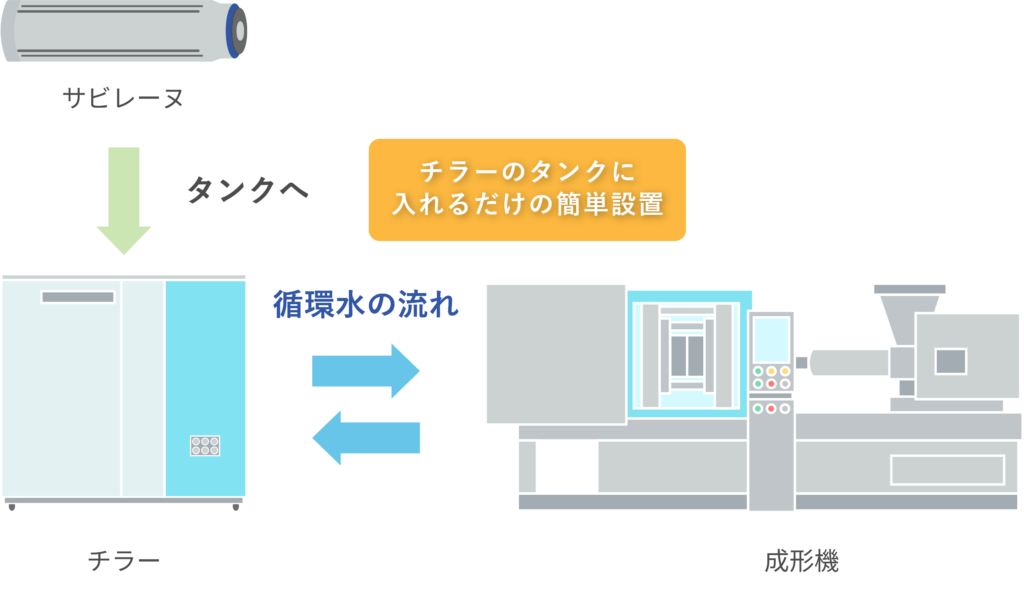
* Use a filter housing for chillers that do not have a tank.
Performance results
Comparative verification of the rust-inhibiting effect of SAVVYLAINE®
An experiment was conducted to simulate a circulating cooling water environment by filling a stainless steel container with water and immersing steel material (S45C). In this test, the occurrence of red rust was compared with and without SAVVYLAINE®.
In addition, a heater is used to reproduce the temperature conditions during chiller operation, and a submersible pump is used to generate water flow, recreating conditions close to an actual circulation environment.
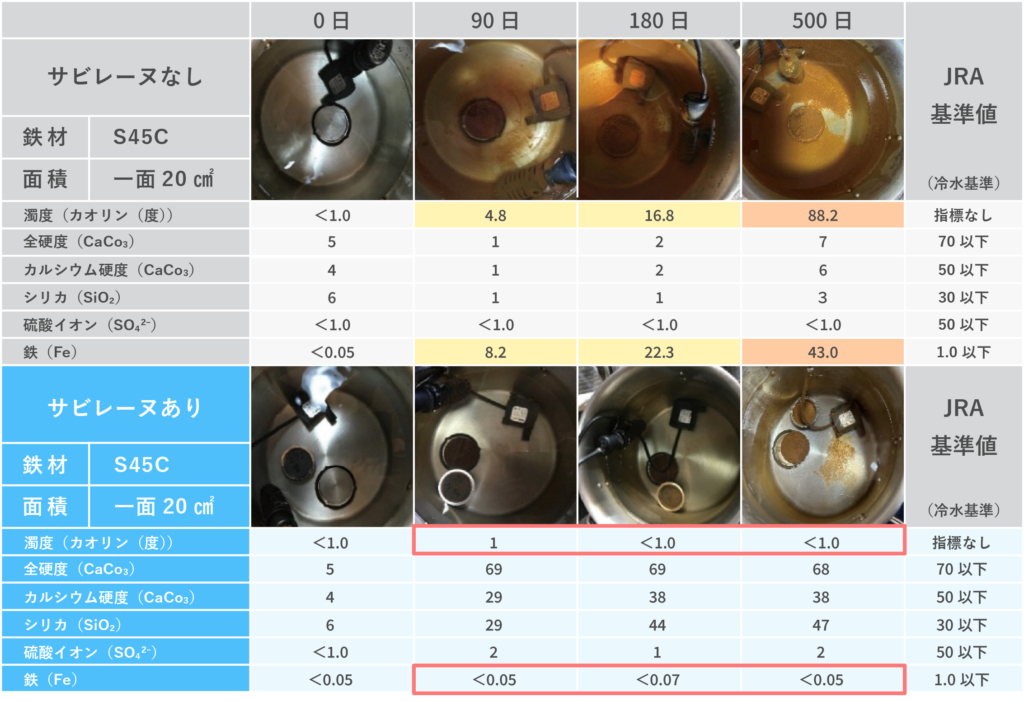

When SAVVYLAINE® was not used, the iron (Fe) concentration in the container significantly exceeded the standard value, reaching approximately 43 times the standard value by the 500th day. On the other hand, when SAVVYLAINE® was used, the concentration barely changed from the initial value (0.05) even after 500 days, remaining below the standard value (1.0).

Indeed, the difference is clear when you look at the photos. It shows that the quality of the circulating cooling water has a significant impact on the condition of the equipment and stable costs.